Thoughts and illustrations on living on the autism spectrum.

Showing posts with label neurodiversity. Show all posts

Sunday, April 27, 2014

Systematic Like Me

Hey, do you like personality tests? Maybe you know your Myers-Briggs type, but do you know your communication style? Before you read the rest of this post, take this 25 question test. [PDF]  

Note: When scoring, you may notice that question 8 has no number. The scoring form (page 5) goes in order, numbering is just off by 1 starting with #9. Please excuse the glitch; this is the only “free” version of the test available online.

...

So, which style did you score?

If you’re on the autism spectrum, I have a hunch that your dominant score was Analytical. (Also called Systematic.) The vast majority of my answers were in this category. Many common autistic traits can be found under the Systematic type. (Introverts in general will probably score here too.) But I also scored in other categories for certain questions… weird!

The HDRQ Personality Style Model posits that there are four communication styles, based on your choice of words, the way you say them, your body language, and personal space preferences.


It can also be described as a continuum from low to high expression of emotions, and low to high assertiveness in influencing others, with the four styles representing four quadrants. Read a more detailed analysis of the HRDQ model here. [PDF]

There’s something fascinating about this test. Look what they say! Systematic is one of four normal communication styles you find. All four styles have their strengths and weaknesses - and none is considered undesirable! I find that a nice bit of neurodiverse thinking, don’t you?

I wrote some time ago about “chasing typical,” how back in school, I was told my style was a weakness, limited my potential, needed to be changed, and so on. Imagine if my "shortcomings" had been viewed as a normal personality style instead. Not only normal, but valued! Hm, perhaps I am more typical than I thought...

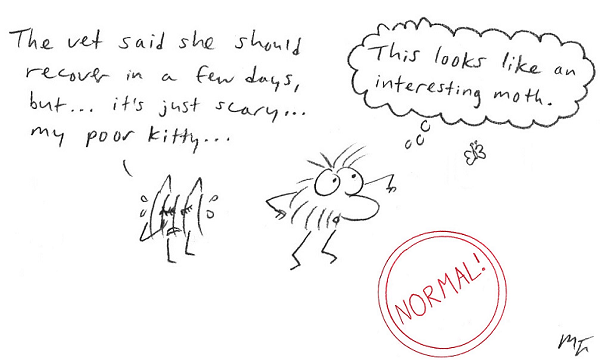
So, to review: When an acquaintance puts their hand on your arm, you get annoyed: Normal!


When someone messes with your neat, organized desktop*, you get upset: Normal!


When people get upset or cry in front of you, you try to remove yourself from the situation: Normal!


So if you’re Systematic like me, use your strengths! Flex dem muscles! You don’t need to change.


* Thanks @shitmyaspiesays for words to live by.

Thursday, October 31, 2013

Real Monsters of Autism

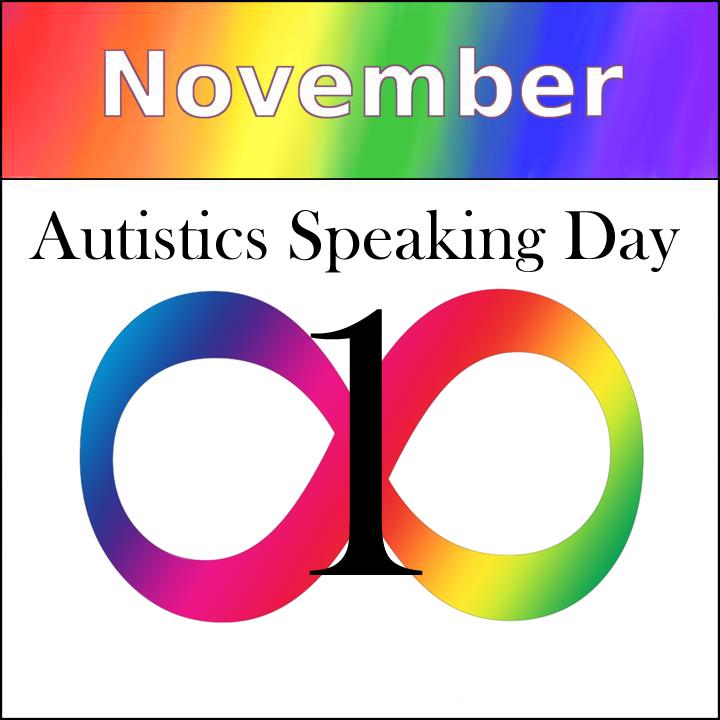
November 1 is the 4th Annual Autistics Speaking Day, and the word is beware. Beware! For here be monsters. On Halloween we celebrate imaginary monsters, but monsters are all too real in the world of autism. So too are the dangers they bring. If you want to speak up for autistic people, then speak out against these monsters.

(Inspired by Toby Allen’s Real Monsters.)
The Curebie Quacksalver
The Curebie insists autism can be cured, and his bag of tricks is full of deadly potions he’s willing to try on innocent test subjects. Treatments like bleach, or chelation. He cares not for any ill effects of his remedies, so convinced is he that the patient can “recover.” The idea of autism acceptance, he dismisses as laziness. The Curebie’s dogged persistence is rooted in his deep-seated hatred of autism.

The Denier Diablo
The Denier is learned in the dark arts, able to raise from the dead theories that have been scientifically banished, most notably a link between vaccines and autism. With one head perpetually buried in the sand, he ignores reality while cherry-picking statistics to support his outlandish claims. His other head wears a gas mask to guard against environmental toxins. The Denier is prone to tirades about the “truth” behind what causes autism. His arguments against vaccination risk reanimating the most lethal of all zombies, preventable disease, like measles.

The Celebrity Spellbinder
The Celebrity is the Big Cheese, the High Muckamuck, the Top Banana. But it’s her ideas about autism that are truly bananas. This behemoth personality uses her fame as a platform for pseudoscience, legitimizing what would otherwise be a fringe movement. She is known to distort or overgeneralize information, smearing the name of autistic people, falsely linking them to evils such as pedophilia. The Celebrity has blood on her hands from her ever-mounting body count of deaths and preventable illnesses suffered by her followers.

The Surrogate Silencer
The Surrogate fancies himself a spokesperson for the disabled, though not disabled himself. With his oversize megaphone, he readily raises his shrill voice over others, his loud volume justified (in his mind) by his advanced degree or job title. Not satisfied to drown out autistic voices, he would even silence them, through rules like “quiet hands.” The Surrogate is a skilled ghost-writer, churning out policies and fundraising appeals without representation from those he purports to serve! This specter’s menace is his denial of equal rights, like educational opportunities, or organ transplants, based on disability. He makes it about you, without you.

The Poison-Tongued Phantasm
The Poison-Tongue espouses vile, bigoted attitudes about autism, which she liberally dishes from behind the safety of her masked face. She harasses autistic people and their families with threatening letters slipped under doors, asking that they “do the right thing” and move, or put their child away somewhere permanent. The Poison-Tongue leaves in her wake the use of slurs like the R-word, poor grammar, and liberal use of exclamation points. She may hide her face, but never her forked tongue.


The Cold-Blooded Caregiver
The Caregiver who murders her autistic child has decided it is better to be dead than disabled. She believes herself an “angel of mercy” who is saving her child from suffering, when she has lost faith in supportive services and her own ability to cope. Many times, if only a true angel had intervened, her challenges and fears might have been properly addressed, before she acted out of desperation. Other times, she is purely selfish, focusing on her own stress instead of her child’s needs, even to the point of winning public sympathy for herself, with the life lost seen only as a footnote. What could be more monstrous?

Incredibly, all these real monsters of autism claim they are actually doing good. As long as these misconceptions persist, autistic people face real danger. This Autistics Speaking Day, let’s keep it real, and call a monster a monster.

Sunday, April 14, 2013

Caution: Aspies at Work

Chances are, if you’re on the spectrum, routine is important to you. In the workplace, more than anywhere else, routine can be an obsession, even for NT’s. We often have limited choices in our work area, but we have a remarkable ability to acclimate by imposing our own structure that becomes essential to our productivity. Unsurprisingly, anyone who tries to change our habits may encounter resistance. In my 15 years in the workplace, I’ve certainly seen my share of changes in work environment, and done my share of settling in and out of grooves.

When I first started out, I worked from home. My boss didn’t have space for me in the office, but he bought me a fax machine so he could send me handwritten comments on my grants. It was fine, because I can read anyone’s chicken scratch. I doubt he ever did learn to use “track changes.”

The worst workspace I ever had was a cubicle inside a laboratory full of machinery that buzzed and burbled continuously. One needed to don protective goggles to cross the border from the cube farm to the front office. Safety first.

For a brief time, I shared an office with two other people. This was less than ideal, but a step down in sensory stress from the lab. Most notably, it was where I heard the news on the morning of 9-11, looking at the photos of the World Trade Center on AOL, and my co-worker’s words, “We’re under attack.”

A private office is the best setting for the detailed writing and data processing I do. I keep my desk neat and uncluttered. Rarely will you find piles of anything. I file next to everything electronically. I decorate simply, with plants and a colorful rug. I’ve had paper-thin walls, and pin-drop quiet. Surprisingly, I prefer the former. Just a reminder of signs of life.

In my current job, I was introduced to the two-monitor setup. At first, I found it nutty and decadent. But now, I don’t know if I could ever go back to one. How else can you read from one document, and type in another? I wonder if the inventor of the widescreen monitor realizes how quickly it became obsolete.

Lunch is at 11:30 or thereabouts. If there’s a lunch meeting scheduled for later, I need to snack beforehand, or I won’t make it. I’ve been across the hall from the lunchroom, and across the building. Proximity is preferable, because I know when the microwave is free, and when someone has left treats.

I’ve shared office space with an HVAC unit that cycled on and off, that I needed to schedule my phone calls around. I’ve lived next door to a server closet that needed a muzzle. I’ve been keeper of the projector. I’ve encountered a ladybug invasion, released a buggy shower of insect parts from the overhead light, and welcomed an oversized water bug to the 10:00 Meet & Greet.

I don’t usually work with music on, except to plow through mindless busy work, and then I’ll put on Pandora. Something mellow, maybe Vince Guaraldi Radio, or Alexi Murdoch Radio, or Phoebe Snow Radio.

I never drink coffee, only water. It needs to be warmed when it’s cold out, and cold when it’s warm out.

I still use a daily planner as my organizer, writing down what needs to be done each day and checking it off, and starting each day with a new page. I don’t own a smartphone; I really don’t desire one. I have a flip phone, and it meets all my phoney needs. I keep a collection of all my paper that's been printed on one side, so I can use the other side as scrap.

I need to go outside at least once a day. If there’s mail to get from a mailbox, or from another building, that’s a good excuse. Otherwise, I’ll make up an excuse.

No office is perfect, but I pride myself on my ability to adapt to whatever is thrown my way. I think most of us have such flexibility, as surely as we swear by the rigid rules with which we mold our work environment to our individual needs. In a neurodiverse workplace, there’s no such thing as “one size fits all,” but an employer who values diverse work styles listens to and accommodates his employees, and thereby ensures the comfort of all.

Sunday, April 7, 2013

The Taupe-inator


The Taupe-inator may be out of commission, but you can still Tone It Down Taupe. Visit to find out more and get involved.

Sunday, December 23, 2012

That Guy You Know

That guy you know, we all know someone like him.

He’s a loner, they say. He keeps to himself.

He's a bit odd and remote, with a very flat affect.


Intelligent, but nervous and fidgety. Bright, but painfully awkward. 


He has “episodes” that involve total withdrawal from whatever he’s supposed to be doing.

Somebody heard he has a disorder, and maybe it is Asperger’s syndrome. 


You don’t know who his friends are. He scares you a little, doesn’t he?


Tuesday, November 1, 2011

Chasing Typical

Today is the 2nd Annual Autistics Speaking Day, a day for those of us on the spectrum to make our voices heard, to raise awareness, and to self-advocate through blogs and social media. If you’re a first-time reader, welcome. I encourage you to read as many points of view as possible today. Then, if you wish, join me in turning your support into action, by making a charitable donation to an autism organization of your choice, such as ASAN.

This is a day for autistic pride. We have so many reasons to be proud. Yet it remains difficult to be as proud as we should. Because for all the awareness we raise, we still feel like aliens on this planet. We do not fit in. It is hard to be proud, when many of us carry with us a sense of shame. If you are a neurotypical (NT), I would like you to understand where this shame comes from. Because every day, however unintentionally or implicitly, you expect us to behave as neurotypicals do. This is an expectation we cannot meet.

I have been told, throughout my life, I have so much potential. I could do so much more. If only I would learn to be more outgoing. I heard it as a child, before anyone knew I was autistic. I still hear it as an adult, from people who know I am an Aspie.

In school, I was an A student. I had “outstanding” math ability, “far exceeded my peers” in grammar, and was “a prepared and excellent test-taker.” In art class, my teacher said of my talent, “Such expressions of beauty and acute perception reveal a mind and soul of rare sensitivity.”

I was a good student. Good, but not good enough.

I would not take part in class discussions, they said, because I “found the contradiction or assent of others too risky.”


I had made “a decision to not communicate orally,” which “stifled my development.”


I was “unmotivated” to discuss class material, “refused to get involved,” and “had no debating skills other than with pen in hand.”


I was disruptive, disrespectful, and a discipline problem.


Consider the effect of such criticism on a middle school age child who was also a victim of bullying by his peers. It was for my own good, they said. These flaws would hold me back in life, and what a shame that would be.

“I can’t do what you ask,” I told them.

“Not can’t,” they said. “Won’t.”

They were so sure. Scornful, even. As if my choice was obvious. As if I was sitting on a treasure chest full of potential, and chose not to unlock it to see what was inside.

No one had heard of Asperger’s back then. But I suspected that I was different. There had to be some reason I could not do these things others found so basic. It would be some 20 years before autism gave it a name.

But at the time, I could not help but develop a sense of self-doubt. A sense I would never be good enough. A sense of shame.

As an adult, learning about the autism spectrum lessened this burden somewhat, but not completely. Our world is an NT world. It will always be an NT yardstick we are measured by. Our world values smiles, phone conversations, small talk, and fitting in with the group. It values extroverts.

As an adult, I continue to receive constructive criticism, well-intentioned, to help me reach my potential. I’m not enough of a leader. I’m not assertive enough. Not engaging or friendly enough. It still hits like a punch in the gut.

I can explain now, that I am autistic, and I may not meet these expectations. I am glad to say people are more understanding, when they know. It still bothers me though, to fall short. It hurts to have to say, “I’m sorry, I can’t do what you ask.” Not because I am defiant, or think I am special, or know better than you, or am not trying. I am differently abled, though I may not look it. “Different, not less,” is still a long way from being reality.

I’m reminded in indirect ways, too, that I fall short of the NT ideal. I’m reminded, every time your conversation swirls around me, and I’m not a part. I’m reminded, when you can’t read my mood by my expression. I’m reminded, in your moment of surprise that I didn’t anticipate what you were thinking. I look like you, but I do the unexpected. I can confuse you, and I feel guilty for that.

I also must allow for the possibility that in fact, I can, and should, be working to improve my social weaknesses. Everyone is capable of self-improvement. I don’t believe being an Aspie should give me a "free pass" against anything I find too hard. Could I be a leader if I tried? Could I have better phone skills? I don’t know. I’m not sure where the line is between “can’t” and “won’t.”

On this Autistics Speaking Day, my hope is that by sharing my point of view, NT’s may understand why I will not always meet your expectations. As one of my readers recently put it, “Too many people are not aware of how far out of our ‘skin’ we go to do things sometimes. Some of them don't realize how it is to push yourself on things that come easy for them.”

It will always be an NT world. Despite the progress we have made in autism awareness and education, I still feel that I am “chasing typical,” looking for something more that will “complete” me. Is there more of my potential inside that locked chest? Or is there nothing but an empty box? Maybe all that potential is already here, outside the box. Maybe I am squandering what I already do best, in chasing after something more that might be inside.

My hope is that a day will come when I no longer have to compare myself to the NT ideal. When I can stop chasing after what I can’t do, and start going full speed ahead at what I can do well. When I am truly free to be different, not less.


To read more posts from participants in Autistics Speaking Day, please visit the AS Day blog or Facebook page.

Sunday, September 25, 2011

Suspend Disbelief

I have been on the adventure of a lifetime.

In the morning, I’ve risen before the sun, awakening to the stillness, the lapping of the water below, the calls of birds, and the distant tolling of the harbor bell.

In the evening, I’ve sat by the fire, detached from my electronic gadgets and not missing them, instead having conversations, and playing cards.

I've seen water so blue, it stops you in your tracks, unable to avert your eyes.

I’ve been to the top of a mountain where the wind stuns, and the mist hangs in plumes at eye level.

I’ve soared over the water aboard a speedboat, along the coast, the ocean spray against my face, past seals, birds, and sailboats, all cares melted away.

I’ve ventured to a tiny island, completely removed from civilization, exploring with careful steps from rock to rock, an otherworldly place all to myself, knowing I would never return to.

I have seen paradise, I’m quite sure.

All because four months ago, I let my old reality burn.

Ten days ago, I returned from a stay in Northeast Harbor, Maine, with my ten co-workers. This was a staff retreat, at my new job. The one I took after I was laid off. The one I accepted with uncertainty, but with a good gut feeling. The one where I had just begun to settle into a new routine and new culture.

One door closes and another opens, I wrote four months ago. But who in their wildest dreams could have expected this? You just never know, when you take a job, what it might lead to, how it might change your life.

As the Asticou jetted along the water under picture perfect skies on a Monday afternoon, I was awestruck simply to be right here, right now. I marveled at the chain of events that fell into place to make this possible. So unlikely, and yet it was happening. I sat and soaked in the constant whirr and vibration of the boat, the wind and the ocean spray, wearing a stupid silly grin. I just couldn't help it. Because instead of sitting at my office desk in Chadds Ford, PA, I was miles and miles away, seeing this,

and this,

and this.

We took the retreat for team building, and it was undoubtedly a success. There was no curriculum. There was no Power Point. We grew as a team naturally, over the five days, by cooking our meals together, navigating our way in the van, and finding fun things to do. We could be people, not co-workers, and so we got to know each other as people.

I talked at length about Asperger's one night, over appetizers of smoked salmon and crackers, at a restaurant called Red Sky. Peppered with questions, I was happy to answer. I coined a classic phrase, "more time and data points." But one question surprised me:

"How come you don’t ask us questions about our lives? Is it because you’re not interested?"

Oh! I didn't realize. Of course I am interested in you, I explained. I learn about you by listening, observing, and asking when I feel the time is right. Please don't be offended if I don't ask. And on and on, we continued to learn from each other.

I wrote back in May:

It can be hard to find guideposts as that reality shifts and reshapes, but I need only remember to be myself, and be proud of who I am, as a person with Asperger’s. If I can do that, I am sure to emerge stronger from this crisis.

I think I have followed this advice, and I think I have emerged stronger. This week you may have read the story of Justin Canha, who found his place in the workplace. I have found mine as well. Even before we went on this amazing trip.

If you’re on the spectrum and job seeking, my advice to you is to be yourself, and good fortune may yet come your way.

If you’re an employer with an opportunity to hire a neurodiverse workforce, do it. Then give them the opportunity to gel as a team, organically. You don't have to take them to Maine. Just let them be people.

And my old job? My replacement quit after four days. And to my knowledge, only a part-timer has been found to fill the position.

In my bedroom at the cottage in Maine, there was a sign on the dresser. It said, "Suspend disbelief." I left for the trip as a new employee; I returned as part of a team. I came in having traveled very little; I returned with the travel bug, and a promise to myself to travel more. It all seemed unbelievable at times, but I suspended disbelief, and returned with more than I ever thought possible.