Who said that? Oh, that’s right… I did! What’s the deal with Asperger’s and evolution? Let’s take a closer look.

Evolution favors traits that help an organism adapt to its environment, and produce more offspring. Is Asperger’s a favorable set of traits?
Aspies have some advantages over NT’s. We are unique problem-solvers. We are truth-seekers. We are well-adapted to the information age.

We also have some disadvantages. We have stims and social difficulties. We are terrible liars. We are less likely to maintain a relationship and reproduce.

So we have both favorable and unfavorable traits. Some autistic traits pose severe challenges. There’s also reason to believe autistic genes have existed for a long time. Perhaps as long as humans have existed. So why are we here? And why, in spite of our challenges, do we seem to be growing in number?

Consider the difference between NT’s and Aspies. We are different in one major way: how we make sense of our environment. Starting from birth, NT’s learn to understand the world through their innate attachment to other humans. Aspies, however, focus on observing the patterns and structure in our environment.

Most of us learn the other way of functioning later, as a “second language.” NT’s acquire autistic behaviors, and vice versa. In this way, we have a symbiotic relationship with NT’s. They learn to specialize, to program a computer, and to enjoy alone time. We learn how to find a job, and buy a house, and read others’ emotions.

How has the symbiotic relationship affected our species? History is filled with eccentrics who became innovators. The Einsteins, the Beethovens, the Michelangelos, engrossed in their work, misunderstood in their time, but later recognized as the developers of new knowledge. No one can say for sure, but they share many characteristics with those of us on the spectrum.

Humans have evolved faster than any other species. We developed tools, built a society and industry, and catalogued our knowledge, all in a comparatively short 50,000 years. We transformed our own environment to favor our own survival. Would this be possible without the innovators? Their unique understanding of the environment based on structures and patterns enabled them to change it for the better.

But we Aspies did not change our world alone. We are different. Not superior. Autistics need NT’s. The inventor’s customers, the philosopher’s audience, the painter’s admirers, are all NT. Without NT’s we wouldn’t have team sports, CEO’s, or soldiers. Without NT’s, how would we spread our ideas?

Some like to think autism is “the next evolutionary step.” It’s an appealing upside to the challenges of the condition, or maybe it just makes a good sci-fi story. I don’t think autism is “the next step” if it means we will become a separate species. Neither do I think we are, in fact, aliens.
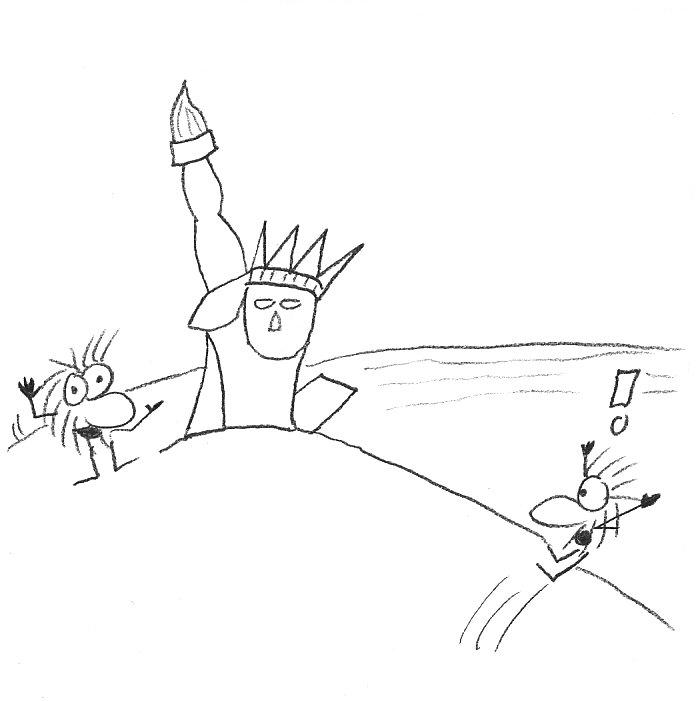
Instead, I think we’re meant to go forward together. Humanity has always depended on the different, to look ahead. We need neurodiversity. We need symbiosis between NT’s and autistics, with each understanding the other’s perspective. And we who are different must make our voices heard, by being our authentic selves in spite of the obstacles the world throws at us.

So no, not everyone will evolve to be autistic. But humanity will always need a few, and it will need to hear us. We need everyone to make the world. To advance, to metamorphize, to reach for the stars, and beyond. That is our “next step,” and we all must take it together. When it comes to our collective evolution as humans, Asperger’s is indeed vital.

Many of the ideas in this post draw on the writings of Alan Griswold. To read more about this theory of autism and evolution, please visit autisticsymphony.com.






 Posts
Posts

